林博仁 LinBoRen / FIELD NOTES / 001
The Concert Continued at the Lake
Three days of jazz, vineyards, cold camping, goats and one signed record in Leibnitz.
Leibnitz · Southern Styria · 25–27 September 2026
A story to linger over. A record to discover at the end.
FRIDAY: A TENT IN THE BOOT
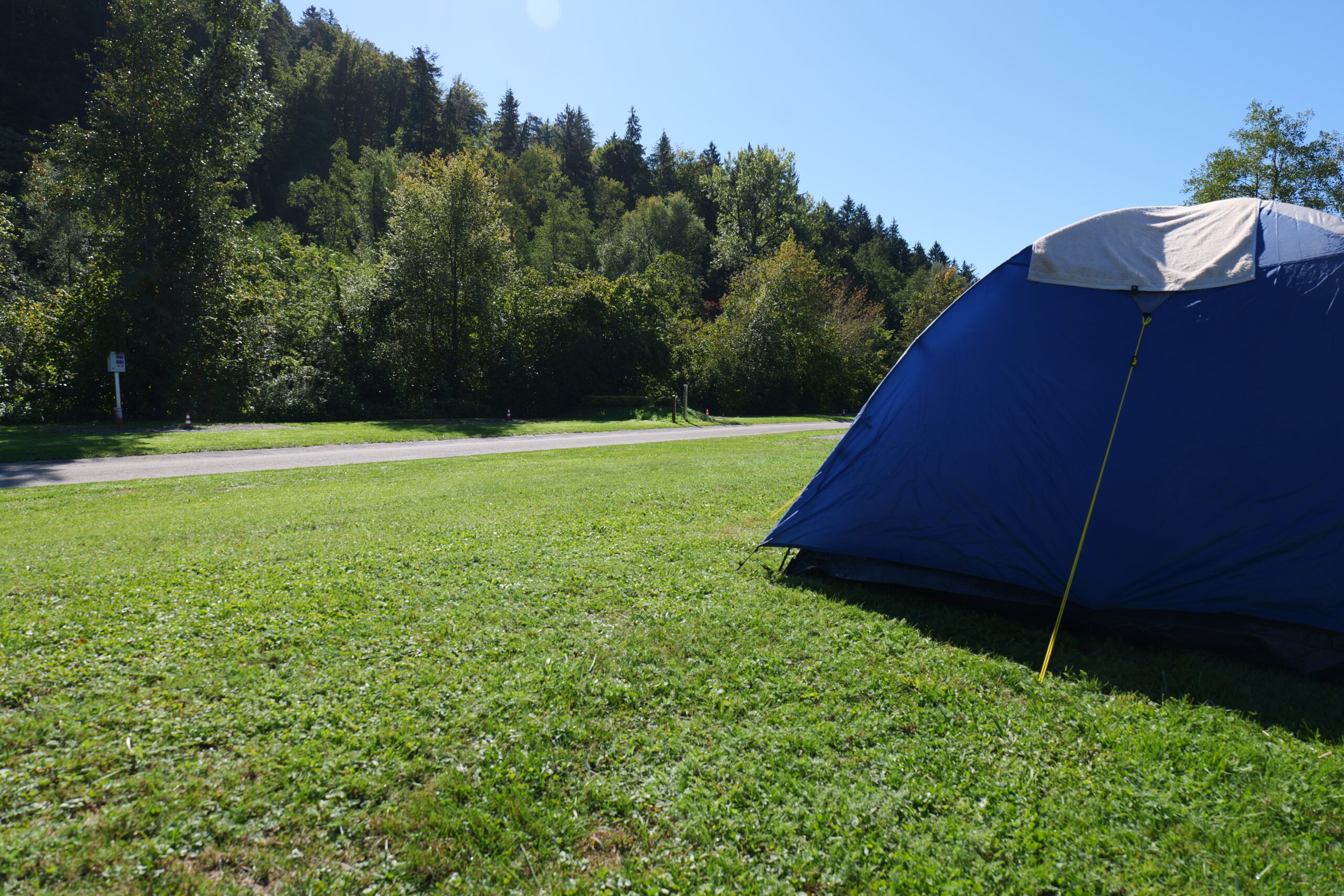
We left Vienna on Friday with a tent in the boot and no particular illusion of glamour. Hotels for an entire jazz weekend were not really in the artistic budget, so we camped at the Sulmsee instead. This turned out to be less a compromise than an editorial decision made by chance.
By the time the tent was standing, autumn had already made its position clear. It was going to be cold. But the place had what a hotel lobby never has: water, mist, animals, dark hills and the feeling that the weekend had actually begun before the first note.
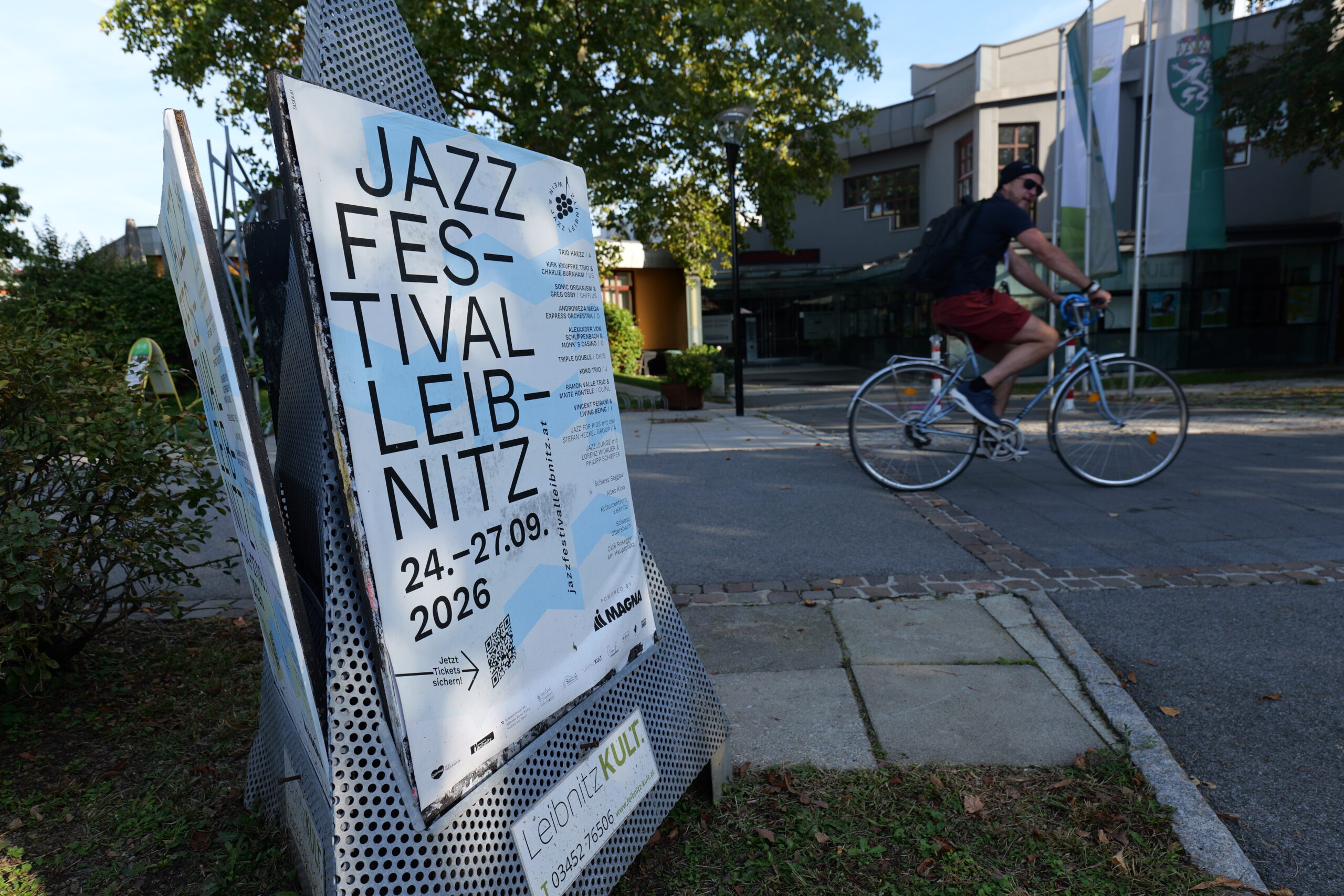
The first thing I loved about the festival was the seriousness of the listening. Arturo Toscanini is supposed to have said that outdoors is a fine place for playing bowls. I understand the old tyrant perfectly. Music built on timbre, small attacks, breath and microscopic changes in colour needs a room. Too many summer festivals turn sound into wallpaper for beer logistics. Leibnitz, at least in the concerts we heard, did the opposite.
The hall was full, the sound engineers were excellent, and during the quiet parts nobody behaved as if silence were a medical emergency. A full room gives energy to musicians; good musicians send it back. That small circuit is still one of the best reasons to leave the house.
FRIDAY NIGHT: FAMILIAR STRANGERS
We arrived in time for Sonic Organism with Greg Osby, João Barradas, François Moutin and Florian Arbenz. I knew Osby from seminars at Siena Jazz years ago, and hearing him again brought back that peculiar feeling one gets around musicians who have been speaking their language for so long that virtuosity stops looking like effort. It is simply syntax.
Then came the Andromeda Mega Express Orchestra, a Berlin ensemble celebrating twenty years together. The festival presents Sun Ra as one of the references; what reached me was something more written, architectural and contemporary: flutes, guitars, harp, vibraphone, electronics, complex arrangements, a certain conservatoire-generation appetite for putting a lot of music on the page. The rebellion was less cosmic than Sun Ra, perhaps, but the point is not to cosplay Sun Ra. The point is to start somewhere dangerous and go somewhere of your own.
At 23:00 came Alexander von Schlippenbach & Monk's Casino: Axel Dörner, Rudi Mahall, Schlippenbach, Jan Roder and Kasper Tom. I had heard this group in Rome almost twenty years ago. That mattered. You could hear two decades of shared time in the way they played.
No music stands. No paper wall between stage and audience. They could drift almost completely into free improvisation and then, without warning, one of Thelonious Monk's angular little machines
would snap into focus in perfect unison. It made sense to me immediately: Ornette Coleman and Don Cherry somewhere in the bloodstream, Eric Dolphy peeking through the bass clarinet, and Monk sitting above the whole thing grinning at the damage.
Monk survives everything. Free jazz, electronics, Latin music, chamber music: turn him upside down and the geometry still works.
Schlippenbach is old now, and at moments the physical effort is visible. But watching him made me think of Muhammad Ali late in life: the body tells one story, then a gesture appears and for a second the old animal is entirely there. It was moving without becoming sentimental.
THE CONCERT CONTINUES
We went back to the tent. It was cold because we had prepared badly, which is a much more elegant sentence than saying we were freezing.
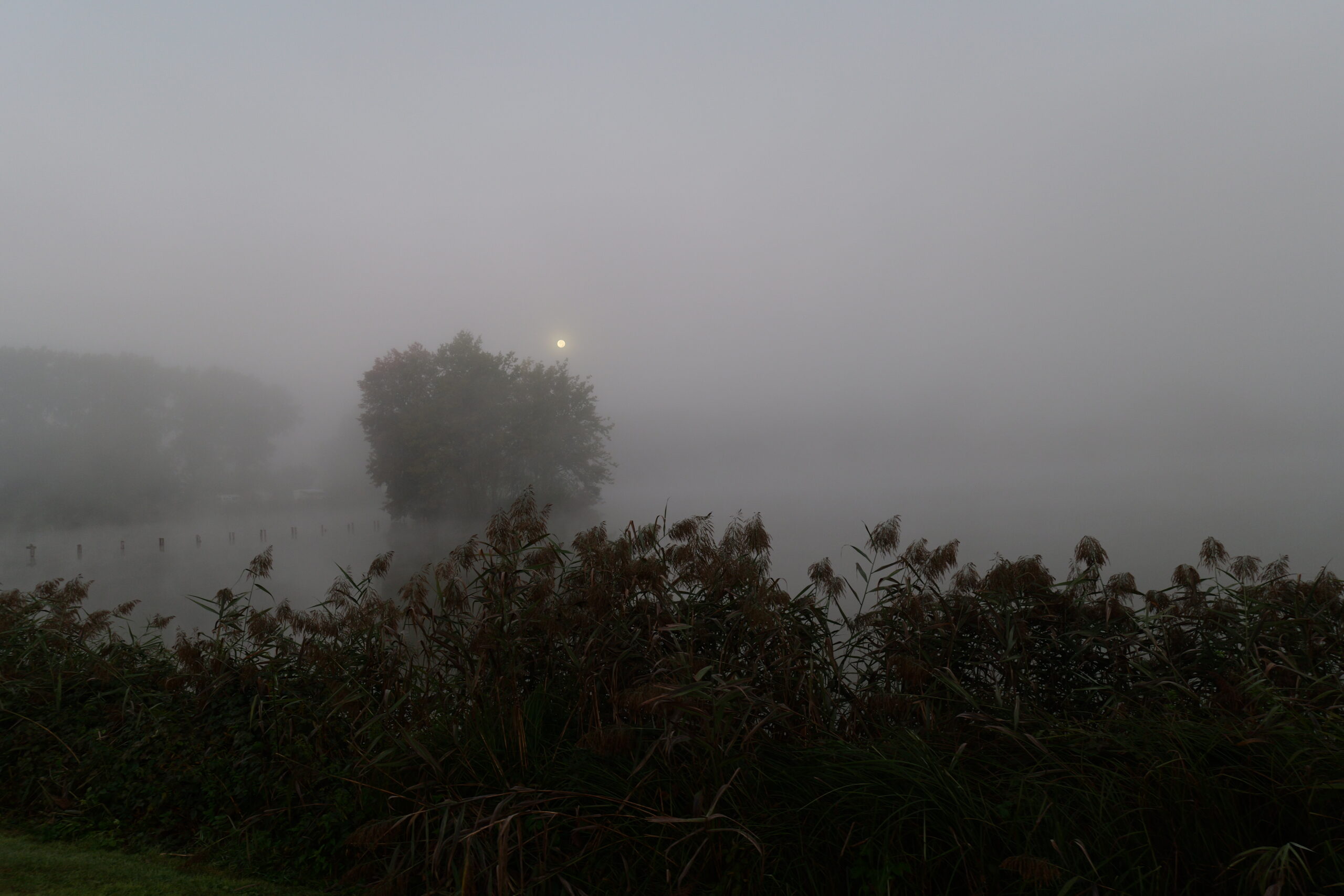
Sometime during the night I got up. The Sulmsee was covered in mist, the moon was reflected in the water, and the animals around the lake were making a ridiculous amount of excellent music. Frogs, birds, things I could not identify. The concert had simply continued without us.
The concert had simply continued at the lake.
That moment stayed with me because musicians spend years training the ear inside rooms. Perhaps we should take it outside more often. There is a continuity between learning to listen to a trumpet and learning to listen to water, insects, wind, distance. Not because nature is automatically profound – nature also contains mosquitoes – but because attention is a practice, and music is one of its best teachers.
SATURDAY: THE USEFUL ART OF DOING VERY LITTLE
The next day we went into the Sausal wine country. The vineyards fall down the hills in absurdly precise lines, as if somebody had asked a land artist with a strong work ethic to redesign agriculture. Along the roads are Buschenschänken and little seasonal wine stops. I do not drink. My travelling companion does. The arrangement worked beautifully for everyone.
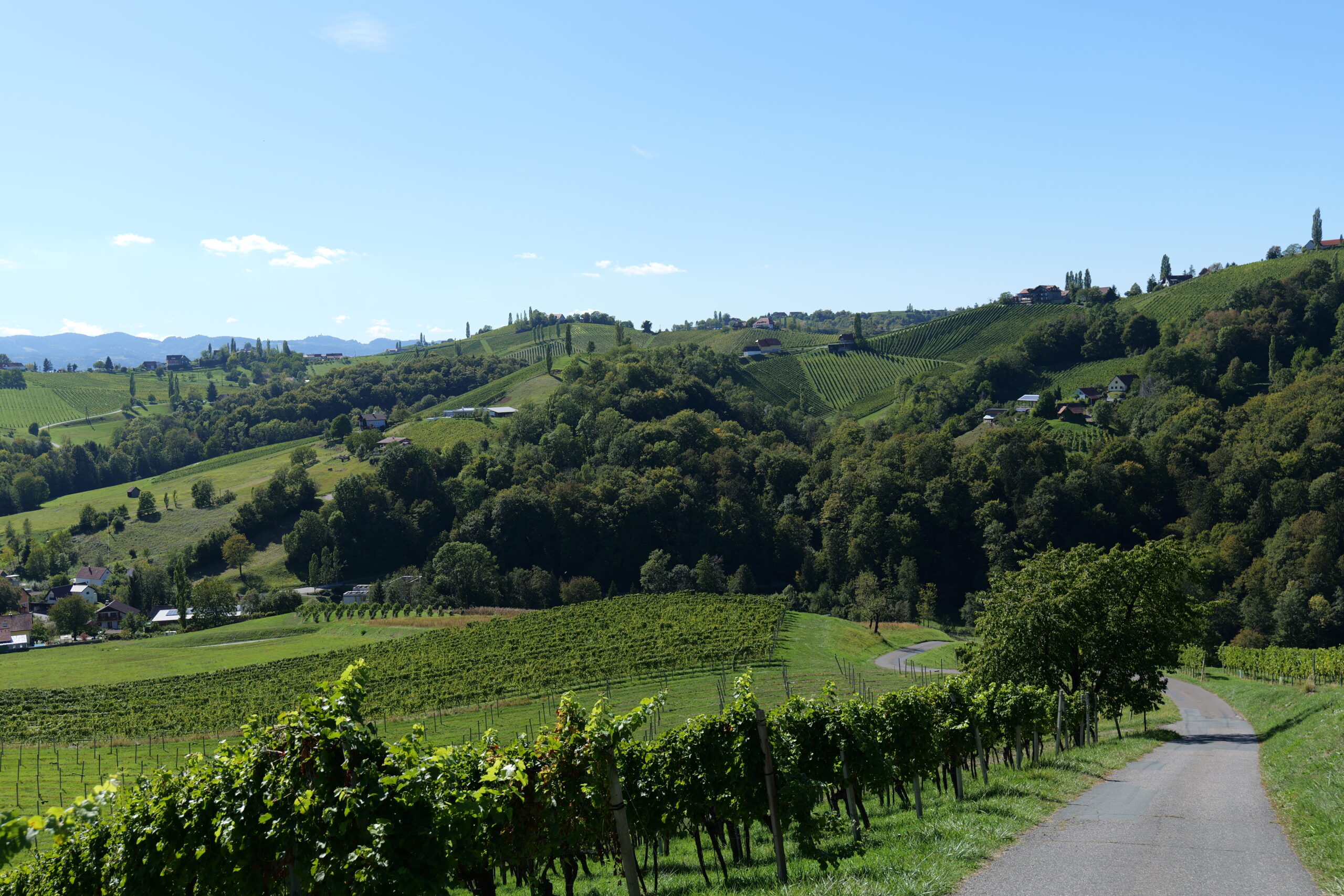
What mattered was the change of speed. You walk, look at hills, stop, continue, and slowly the metropolitan noise in the skull loses political power. That is not incidental to the concert later. It is part of the concert.
Pauline Oliveros called it Deep Listening. I would put it less elegantly: if your brain is still arguing with emails, traffic, invoices and the general administrative comedy of adulthood, you are not in the best condition to hear a bass clarinet attack at pianissimo. Listening needs preparation. Empty space is not wasted time; it is acoustic equipment.
This is why hearing the same group at the Porgy & Bess in Vienna, the Blue Note in New York or in a small Styrian festival can be three different experiences. The notes may be identical. The listener is not.
THREE BASSES, THEN A REICHIAN TRANCE
Saturday evening began with Triple Double: Anders Jormin, Thomas Markusson and Morten Toftgaard Ramsbøl, three Scandinavian double bassists. On paper, three double basses can sound like a joke told by an arranger after midnight. In the room it made perfect sense.
They played original music and arranged standards, staying mostly in the musical world of groove, pizzicato, melody and counterpoint rather than turning the instruments into an extended-technique laboratory. What interested me most was the degree of physical understanding between them. A bassist can anticipate another bassist from the way the bow is prepared or the hand approaches the string. They have fought the same battles with the same pieces of wood.
This is also a useful antidote to the endless rhetoric about “the best bassist in the world”, “the best trumpeter”, “the greatest this or that”. Musicianship is not tennis. Sometimes the most interesting thing is not who wins but what three colleagues can understand before anybody has said anything.
KOKO Trio changed the air completely. Taiko Saito on marimba, Niko Meinhold on piano and Moritz Baumgärtner on drums: for me it felt like an improvised Steve Reich. Small cells repeated; accents moved almost invisibly; the pattern changed so slowly that by the time you noticed, you were somewhere else.
Saito had an enormous physical presence. The mallets, the attack on the marimba, the traditional percussion colours, the choreography of the body: half of what she was saying was audible and half was visible. It was not minimal in the sense of “less stuff”. It was American minimalism in the serious sense: repetition as hypnosis, tiny displacement as drama.
FOR ONE EVENING, HAVANA WAS NEARBY
Then came Ramón Valle Trio with Maite Hontelé, Yandy Martinez on bass and Rodney Barreto on drums. This was the concert where the room changed temperature.
Valle reminded me of Stefano Bollani in one important respect: joy is not decoration in his playing; it is part of the technique. There was also something of Keith Jarrett in the willingness to sing through the piano and let an idea become physical. At one point he paid tribute to Jarrett directly. But the phrase I wrote down afterwards was simpler: he plays to give.
Play to give. Not to demonstrate that you have practised.
He would find a rhythmic cell, lock into a montuno and stay there. Five minutes. Ten minutes. No panic. Academic jazz sometimes develops a strange fear of repetition, as if repeating a beautiful thing might expose a shortage of intelligence. Cuban music has no such anxiety. Stay on one chord. Stay on three. Change the accents, density, groove, faces, pressure, laughter. Let the room catch fire properly before changing the furniture.
And then there was Maite Hontelé on flugelhorn. I used to transcribe her solos when I was younger, so seeing her there had a private little time-machine effect. What I love is precisely what she refuses to do. There is a spectacular Latin trumpet tradition – brilliant, high, athletic, explosive – and it can be glorious. Hontelé can live somewhere else.
Her sound that night was warm, soft and narrative: long lines, space, romance, a Cuban language treated almost as chamber music. Imagine, very approximately, Chet Baker or Tom Harrell having grown up with another rhythmic mother tongue. The flugelhorn mattered. The softness mattered. Nothing needed to scream in order to be intense.
By the end Valle had the audience singing. Good. Musicians were not playing at us. We were in it.
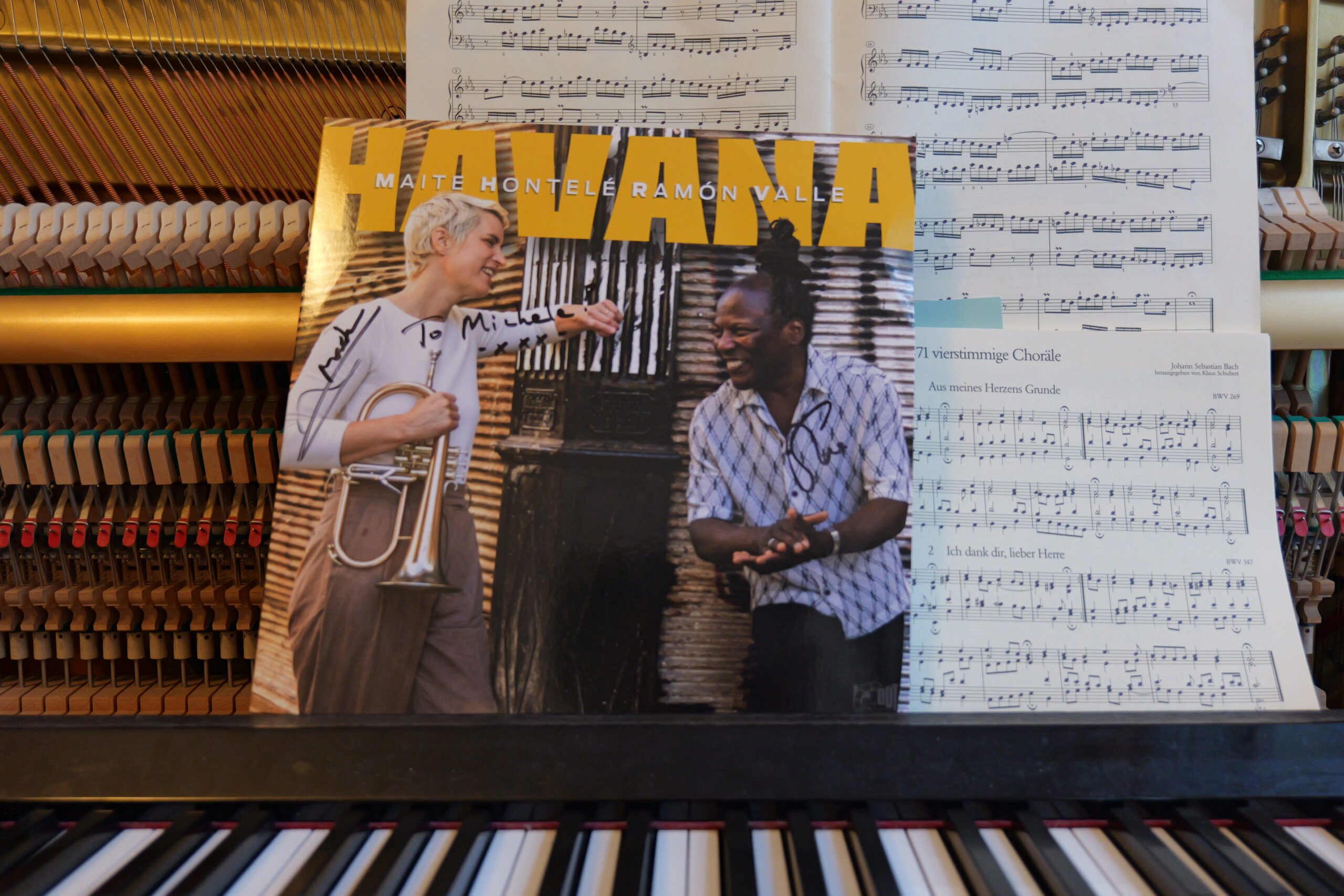
Afterwards I did the only sensible thing one can do after a concert like that: I bought their 2025 duo LP, Havana, and had it signed. It is sitting in front of me while I write this. A record is useful that way: it turns an evening into an object you can accidentally rediscover ten years later and lose half an afternoon to.
SUNDAY: BRASS BANDS, BUMPER CARS AND GOATS
The next day was a useful reminder that a region does not exist for the convenience of jazz intellectuals. Driving through the countryside we found a local wine celebration with a traditional
Austrian brass band – around thirty musicians, young and old – playing while families circulated between wine, food and bumper cars. It had something wonderfully Felliniesque about it: village ritual, machinery, music and people of every generation doing the same thing at once.
When we finally dismantled the tent there was immediate nostalgia, which is embarrassing but true. Across from us a hill rose into the vineyards and a small group of goats ran around as if they had been hired by the regional tourism board. I miss the goats.
Before leaving we went up to Schloss Seggau. The history of the hill reaches back to Celtic and Roman settlement; the castle itself took shape in the Middle Ages, and Roman stones still survive in its lapidarium. Vines have been cultivated on the Seggau land for more than a thousand years. As a Roman, I enjoyed discovering that even here the Romans had apparently arrived before me and started thinking about wine.
From those small heights you see one cultivated hill after another, lines of vines falling into valleys and rising again. Whatever one believes about sacred places, it is easy to understand why humans keep choosing certain hills for ritual, agriculture, community and contemplation. Some places simply encourage attention. Perhaps a good festival borrows that energy rather than trying to manufacture it.
A YOUNGER AUDIENCE, LITERALLY
If I could ask one thing of the future of festivals like Leibnitz, it would be more young people. The audience was youthful in spirit. Chronologically, it was a little less adventurous.
This is not a complaint about older audiences – quite the opposite. Jazz is lucky to have listeners who have spent decades learning how to listen. But younger musicians and younger listeners need to enter the room too, and the economics are real. Festivals have to help. Student prices matter. Cheap access matters. A tent can solve the hotel problem, but only if people first believe the trip is worth making.
Young musicians especially should go. Not because attendance at jazz festivals is a moral duty, but because you cannot renew a musical language only by practising scales, sitting in conservatoires and streaming records through laptop speakers. You need to hear how serious musicians are playing now. You need to argue about it afterwards. You need to dislike some things, steal other things, change your mind, meet people, get cold in a tent and occasionally buy a record you cannot really justify.
And festivals can meet them halfway: jam sessions, workshops, artist conversations, informal encounters, places where the story around the music is allowed to exist. Jazz has always narrated itself. The best concerts understand that the audience does not want a sealed display case with musicians inside. People want an invitation into the story.
Confucian thought treated music not as decorative entertainment but as part of the cultivation of a human being and of social life. That still feels radical in an age that tends to classify music as content. Music is not something we add after the serious parts of life are finished. It is one of the practices through which we learn attention, proportion, memory, pleasure, discipline and how to be with other people.
Music is not something added to life after the important things are finished.
That, more than any single concert, is what I brought back from Leibnitz. A festival can be a temporary school of attention: a room full of strangers, a vineyard, three double basses, a signed record, a bad sleeping bag, a brass band beside the bumper cars, some goats, a lake at night.
And if you are lucky, when the musicians stop playing, the concert continues anyway.
A listening gift · At the end of the story
And now, let the music continue.
The signed record that came home from Leibnitz: Havana, by Ramón Valle and Maite Hontelé. Stay for a while and listen.